Blog / Car Comparison

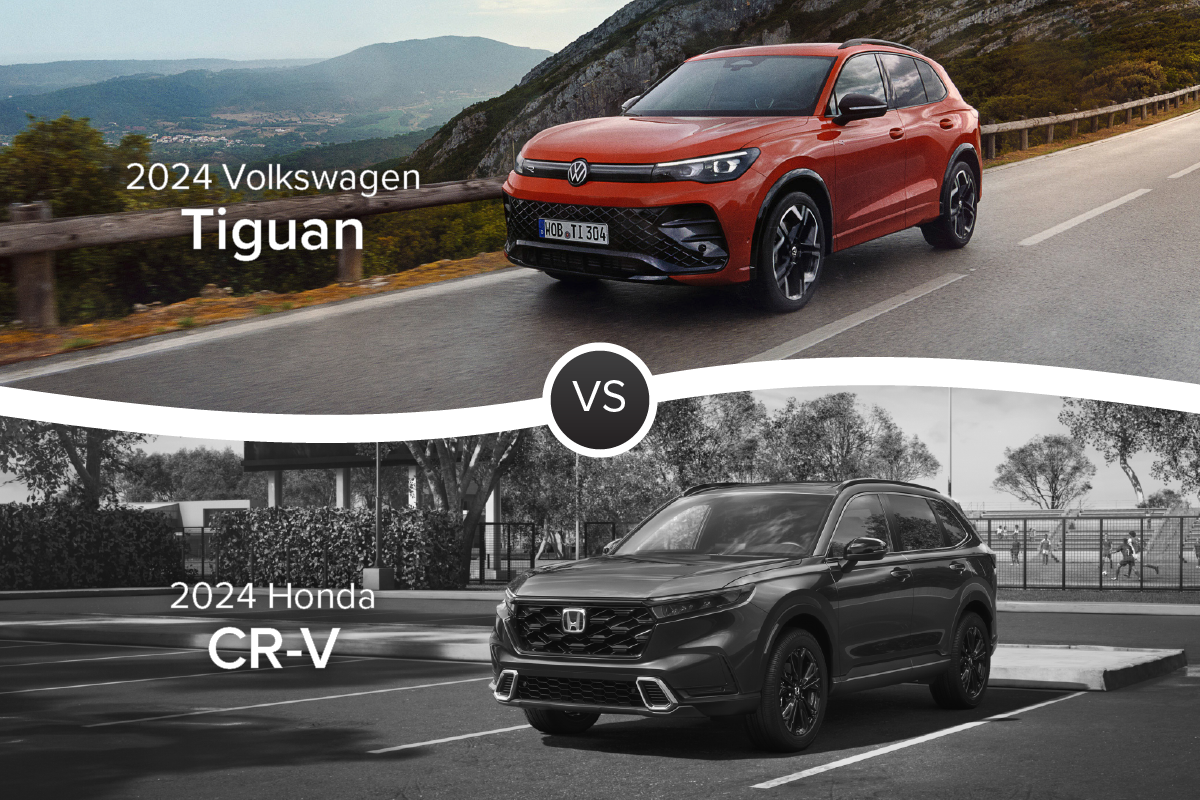
4 Reasons the Volkswagen Tiguan Beats the Honda CR-V

4 Reasons the Volkswagen Tiguan Beats the Honda CR-V

With so many excellent compact SUVs on the market, it’s hard not to draw comparisons. Sure, one may be the SUV with the most cargo space, or the SUV with the best gas mileage, or the safest SUV, but is there a particular model that reigns supreme as a whole?

We can’t compare them all here, but we can certainly pit one of our all-time favorites, the VW Tiguan, against one of the most popular SUVs, the Honda CR-V. Here are just a few reasons why the Tiguan is the best choice when you test drive a new car near Shreveport, LA.

Tiguan vs. CR-V: Price

First, let’s talk about both models’ overall value.

Volkswagen Tiguan Trims:

  • S: $28,880
  • Wolfsburg Editon: $$30,995
  • SE: $31,580
  • SE R-Line Black: $34,580
  • SEL R-Line: $38,880

Honda CR-V Trims:

  • LX: $30,100
  • EX: $32,350
  • Sport Hybrid: $34,650
  • EX-L: $35,000
  • Sport-L Hybrid: $37,650
  • Sport Touring Hybrid: $$41,100

It’s fairly close, but the Tiguan lineup begins and ends thousands of dollars less expensive than the CR-V. So, does the CR-V provide enough to justify its inflated price tag?

Tiguan vs. CR-V: Interior

One of the main benefits of owning a compact SUV is that it allows you an incredible amount of versatility in terms of seating and storage but also maintains the easy drivability of a smaller vehicle.

The CR-V is a two-row SUV with seating for five, and this is the only available configuration. However, the Tiguan actually has two different seat layouts—4MOTION® all-wheel drive models get five seats, while models with front-wheel drive have three rows, which allows seating for seven people to fit comfortably.

This flexibility gives the Tiguan a massive leg up compared to other compact SUVs. The CR-V has a maximum passenger volume of 106 cubic feet, while the three-row Tiguan has a total passenger volume of 124 cubic feet when all three rows are up. So, despite having slightly less cargo space, the Tiguan takes the cake for having the best interior dimensions.

Tiguan vs. CR-V: Infotainment

All Tiguan models come with an 8.0-inch color touch screen display, which also features physical knobs for those who prefer them. It has numerous standard connectivity features like multiple USB ports, wireless App-Connect®, Bluetooth®, SiriusXM®, and Car-Net®, which includes security monitoring, emergency calling, and an in-vehicle Wi-Fi hotspot. Volkswagen Digital Cockpit is also standard across all trims, and upper-level models come with wireless phone charging as well.

Base trims for the CR-V get a 7-inch touch screen, while the top three get an upgraded 9-inch display. Standard features include USB connection, wired Apple CarPlay®/Android Auto™ and Bluetooth®, but features like SiriusXM®, wireless phone charging, and onboard Wi-Fi are only available when you upgrade to the more expensive trims, giving the Tiguan a distinct edge in terms of infotainment offerings.

Tiguan vs. CR-V: Safety

Both SUVs have an impressive collection of standard driver assistance features, as well as solid safety scores. Here’s a list of the standard features they have in common:

  • Adaptive cruise control
  • Forward collision warning
  • Automatic emergency braking
  • Pedestrian detection
  • Lane keeping assistance

However, the Tiguan has a couple of features, such as semi-automated driving assistance, rear traffic detection, and blind spot monitoring, that the CR-V either doesn’t have, or only has in higher trim levels.

2024 VW Tiguan for Sale Near Texarkana

There’s no doubt that there are plenty of great compact SUVs out there, but if you want the best of the best, the Volkswagen Tiguan is the only way to go.

If you’re looking for a fantastic vehicle at a fantastic price, Family Volkswagen of Bossier City has tons of finance and lease specials on new cars, plus other special offers including bonuses for college grads, first responders, and military.

We’re committed to providing the best prices to our community. If you’d like to learn more or schedule a test drive, give us a call at (318) 746-2175, or contact us online.
Posted in:

Related Posts

Car Comparison: Volkswagen Jetta vs. Toyota Corolla

Car Comparison: Volkswagen Jetta vs. Toyota Corolla

The 2026 Jetta and 2026 Corolla are two shining examples of compact economy car craftsmanship. They both offer shoppers a highly affordable and fuel-efficient way to get around town, and both have an impressive list of standard and available features. But which one should you buy? Should you just toss a coin and let fate decide? You could do that—or you can check out our quick analysis to find out which one truly comes out on top for shoppers near Shreveport. Keep reading to see which one comes out on top. more Jetta vs. Corolla: MPG and Performance The Jetta is motivated by a 1.5-liter TSI® turbocharged 4-cylinder engine, which cranks out 158 horsepower and 184 pound-feet of torque. It’s routed to an 8-speed automatic transmission and comes standard with front-wheel drive. With this setup, it achieves an estimated 29 MPG city and 40 MPG highway. Meanwhile, the non-hybrid Corolla has a 2.0-liter 4-cylinder motor that creates 169 horsepower and 151 pound-feet of torque. It comes with a CVT transmission and front-wheel drive, and when properly equipped, it can achieve up to 32 MPG city and 41 MPG highway, although only with the base-level LE trim. So, the Corolla gets slightly better gas mileage, albeit just barely. However, the Jetta may still be a better choice because of the superior performance, especially acceleration off the starting line, provided by its turbo engine. The critics at Car and Driver were able to get the Jetta from 0 to 60 in 7.1 seconds, and they praised its pleasant driving demeanor in their review. On the other hand, they noted the Corolla clocked 0 to 60 in 8.3 seconds, which some drivers will find a bit too sluggish. This is largely because the Jetta has superior suspension and driving dynamics, and while it has slightly less horsepower, it puts out significantly more torque. Jetta vs. Corolla: Dimensions While they’re both smaller cars compared to other models, you certainly don’t want to feel cramped while commuting or road tripping. Here’s a side-by-side look at their interior dimensions: 2026 Volkswagen Jetta 2026 Toyota Corolla Passenger capacity 5 5 Head room (front/rear) 38.5 / 37.2 in 38.3 / 37.1 in Legroom (front/rear) 41.1 / 37.2 in 42.0 / 34.8 in Total passenger volume 94.7 cu ft 88.6 cu ft Cargo volume 14.1 cu ft 13.2 cu ft Some of these numbers are neck-and-neck, but looking at second row legroom, trunk space, and the total volume in the cabin, the Jetta is much roomier on the inside, which makes for a far better experience for families. Jetta vs. Corolla: Interior and Tech All Jetta models come with an 8.0-inch floating infotainment touch screen, which comes standard with Bluetooth, wireless App-Connect (Apple CarPlay® and Android Auto™), multiple USB ports, and compatibility with myVW+ connected services, including Wi-Fi. Available features include wireless phone charging, onboard navigation, and the 10.25-inch Volkswagen Digital Cockpit Pro driver info display. The Corolla can be optioned with an 8.0-inch center touch screen in the lower trims or a 10.5-inch screen in the top-tier XSE. Standard features include Bluetooth, wireless Apple CarPlay®/Android Auto™, USB ports, and Toyota Connected Services, and it can also be optioned with wireless phone charging and a 12.3-inch digital gauge cluster. To sum it up, both have an impressive array of connectivity features. The Corolla has slightly larger available screens, but you’ll have to pay for the highest trim to enjoy them, so the matter ultimately comes down to your personal taste. Jetta vs. Corolla: Safety Features The 2026 Jetta comes complete with Volkswagen’s IQ.DRIVE suite of driver assistance features, which includes: Adaptive Cruise Control Forward Collision Warning Automatic Emergency Braking with Pedestrian Monitoring Lane Keeping System Active Blind Spot Monitor Rear Traffic Alert Emergency Assist Semi-automated driving assistance The 2026 Corolla comes standard with the following features: Full-Speed Range Dynamic Radar Cruise Control Pre-Collision System with Pedestrian Detection Lane Departure Alert with Steering Assist Lane Tracing Assist Blind-Spot Monitor Rear Cross-Traffic Alert Automatic High Beams Road Sign Assist The 2026 models haven’t been officially rated for safety by the National Highway Traffic Safety Administration (NHTSA) yet, but their nearly identical 2025 versions received five-star crash test scores. The Jetta has a slight edge for its semi-automated driving assistance with Travel Assist, but aside from that, you can rest assured that both are quite safe. Find the 2026 VW Jetta for Sale near Marshall, TX For our money, the Jetta comes out on top for its superior performance, roomier cabin, and extra tech features, but we always encourage our customers to do plenty of research before they buy. One of the best ways to see which one is the best is to come to Family Volkswagen of Bossier City and test drive a new Jetta for yourself. Once you’ve taken one for a spin, you can browse our new vehicle inventory to find the perfect Jetta for you, and you can also take advantage of our new vehicle specials to find VW lease deals and low interest financing. Call us at 318-746-2175 or contact us online to get started today.

2025 Volkswagen ID. Buzz Trim Comparison

2025 Volkswagen ID. Buzz Trim Comparison

The ID. Buzz has only been on the streets for a matter of months, but it’s already charmed its way into the hearts of shoppers with its retro-futuristic vibes. There’s plenty to love about this modern take on the classic VW Microbus, but before you pick the perfect one, you’ll have to decide which trim you want. If you’re not sure which model is best for you, read on to discover all the ins and outs of different ID. Buzz trims. more VW ID. Buzz Trims at a Glance For the 2025 model year, the all-electric ID. Buzz is available in three different trim levels. Here’s what you can expect to find when you visit our VW dealership near Shreveport, along with their respective starting prices: ID. Buzz Pro S: Starting at $59,995 ID. Buzz Pro S Plus: Starting at $63,495 ID. Buzz 1st Edition: Starting at $65,495 Additionally, the top two trims can be optioned with 4MOTION® all-wheel drive: ID. Buzz Pro S Plus with 4MOTION®: Starting at $67,995 ID. Buzz 1st Edition with 4MOTION®: Starting at $69,995 VW ID. Buzz Range by Trim Level Like many other electric vehicles, the ID. Buzz is available in two different powertrain options—there’s the aforementioned 4MOTION® all-wheel drive with two electric motors, and there’s the single-motor rear-wheel drive option. However, this doesn’t have as big an effect on total range as you might think. With rear-wheel drive, the ID. Buzz has an estimated range of 234 miles on a single charge and gets a combined 83 MPGe, while 4MOTION® all-wheel drive models have an estimated range of 231 miles and get an estimated 80 MPGe. Charging speeds are also very similar between the two available powertrains. Using 200-kilowatt DC fast charging, the ID. Buzz can jump from 10 to 80% juice in about 26 minutes, making it perfect for everything from errands in town to cross-country road trips. VW ID. Buzz Performance by Trim Level The difference in range between rear-wheel and all-wheel drive may not be big, but it does play a major factor in performance. RWD models produce 282 horsepower, while AWD models crank out a combined 335 ponies, which has a noticeable effect on acceleration. When testing the ID. Buzz 0 to 60 MPH times, Car and Driver noted that models with RWD did it in 6.7 seconds, while AWD models come in significantly quicker at 5.5 seconds. It also has an effect on towing capacity—RWD models max out at 2,700 pounds, but the ID. Buzz with 4MOTION® can haul up to 3,500 pounds when properly equipped. VW ID. Buzz Features by Trim Level Interestingly, the powertrain also has an effect on the interior seating layout. Rear-wheel drive models come standard with the second-row bench seating configuration with room for seven people, while 4MOTION® models get the second-row captain’s chairs, giving it a max seating capacity of six. The Pro S Plus with RWD can also be optioned with captain’s chairs. Aside from that, here are the features you can expect from each ID. Buzz model: VW ID. Buzz Pro S Features LED projector headlights 20-inch two-tone “Disc” alloy wheels Copper or Moonlight interior Power sliding doors and tailgate Removable center console 115-volt power outlet 30-color adjustable ambient lighting V-Tex leatherette seating 12-way adjustable power front seats with massage function Heated and ventilated front seats Heated steering wheel Climatronic® three-zone climate control Wireless phone charger 12.9-inch center touch screen display Wireless App-Connect (Apple CarPlay® and Android Auto™) Voice control IQ.DRIVE VW ID. Buzz Pro S Plus Features Most standard Pro S trim features Copper, Moonlight, or Dune interior Hands-free Ease Open and Easy Close sliding doors and tailgate Flexboard adjustable storage system Harmon Kardon® 13-speaker premium sound system Head-up display Area View VW ID. Buzz 1st Edition Features Most standard Pro S Plus features 1st Edition exclusive wheels and exterior accents Electrochromic Smart Glass Roof Roof rail cross bars Dune interior Find the VW ID. Buzz for Sale in Bossier City, LA Reading about it is all well and good, but the best way to find your dream car is to get behind the wheel and take it for a spin. At Family Volkswagen of Bossier City, we have a selection of ID. Buzz models to check out, and we also offer new vehicle specials, including low APR financing to get you an affordable monthly payment. Any questions? Contact us online or call us at 318-746-2175.

Volkswagen ID.4 vs. Volkswagen Tiguan

Volkswagen ID.4 vs. Volkswagen Tiguan—Which is Better for You?

Folks everywhere are getting more and more curious about making the switch to electric vehicles. While they may not be for everyone, EVs like the VW ID.4 can be an excellent solution for many American families to end their dependency on fuel. On the other hand, traditional gas-powered SUVs like the VW Tiguan still command most of the market, and they may still be the best option for many shoppers in Bossier City, LA. If you’re looking for your next new car and you’re still on the fence about which kind of vehicle is best, this article is for you. more Propulsion System First, let’s address the most obvious and important difference between these two SUVs. The ID.4 is powered by Volkswagen’s MEB electric vehicle architecture, which is powered by either a single electric motor at the rear axle (RWD) or two electric motors at both axles (AWD). It also has two different available battery packs, an entry-level 62-kWh pack for budget shoppers and an 82-kWh pack for maximum available range. With the ID.4 Pro or Pro S and rear-wheel drive, this EV is capable of a max range of 291 miles, and with DC fast charging, it can go from 10% to 80% charged in half an hour. The Tiguan is motivated by a turbocharged 2.0-liter 4-cylinder engine, and it can be optioned with either FWD or 4MOTION® AWD. Front-wheel drive models are capable of getting 24 MPG in the city and 31 MPG on the highway, making it a strong competitor among other SUVs in its class. Recharging and Refueling The ID.4 has a solid max range compared to other electric SUVs, but how does it compare to an internal combustion model like the Tiguan? It’s estimated that the Tiguan can go anywhere from 400 to 450 miles on a full tank, which gives it significantly more range overall. It’s also quite a bit faster to refill the gas tank than it would be to charge the ID.4’s battery at a public station, so the Tiguan has an advantage when it comes to cross-country travel. However, the ID.4 has a key benefit: at-home charging. With a level 2 charger installed at home, shoppers can easily leave the house every morning with enough juice for a long commute, a day of running errands, or even a short road trip. Charging at home is a far less expensive option than public charging, and it’s likely to save money compared to gas costs as well. Performance and Power EVs are well-known for their quick performance thanks to the nearly instant torque provided by the electric motor. In their review, Car and Driver noted that their ID.4 AWD was able to make it from 0 to 60 in just 4.8 seconds. The Tiguan is no slouch when it comes to acceleration, but C&D timed its 0-60 run at 8.2 seconds, so it’s clear which one is going to have an easier time merging onto the highway. The ID.4 also has more power overall, especially in its 82-kWh AWD configuration. It’s capable of towing up to 2,700 pounds, while the Tiguan maxes out at 1,500 pounds of towing capacity. Interior Space From the outside, the ID.4 is somewhat smaller than the Tiguan. It’s about half a foot shorter and an inch lower, but its unique battery architecture leaves a surprising amount of room inside for passengers and cargo. It has 99.9 cubic feet of passenger space, with 41.1 inches of legroom in the front row and 37.6 inches in the rear. It also has 30.3 cubic feet of cargo area behind the second row and a maximum of 64.2 cubic feet thanks to the flat-folding rear seats. On the other hand, the Tiguan gets points for its versatility because it can be configured as either a two-row (AWD) or three-row (FWD) model. This gives shoppers and families a fantastic amount of choice. The three-row Tiguan has up to 65.3 cubic feet of storage with the seats folded, while the two-row model has up to 73.4 cubic feet. Features For the 2024 model year, the base-level Tiguan comes with a 6.5-inch center touch screen display. All others get an 8.0-inch touch screen, and all models come with the VW Digital Cockpit, Bluetooth®, and Volkswagen Car-Net® with an in-vehicle Wi-Fi hotspot. The 2024 ID.4 offers either a 12.0-inch or a 12.9-inch center touch screen display. It comes with all the features the Tiguan has, plus App-Connect with Apple CarPlay®, Android Auto™, and more. The Tiguan is set for a refresh in the coming model year, and we expect it to receive some massive infotainment upgrades, but for now, the ID.4 provides a far more tech-forward experience. Safety Two things that both SUVs have undeniably in common are their stellar safety ratings and their extensive list of driver assistance features. VW’s IQ.DRIVE ® features are standard in all trims across the board for both models. The driver assistance package in the ID.4 and Tiguan includes the following features: Adaptive Cruise Control (ACC) Stop and Go Travel Assist (semi-automated driving assistance) Front Assist (Forward Collision Warning and Automatic Emergency Braking with Pedestrian Monitoring) Active Side Assist (Blind Spot Monitor) Rear Traffic Alert Lane Assist (Lane Keeping System) Emergency Assist (semi-automated vehicle assistance in a medical emergency) The ID.4 also comes with Park Distance Control, Park Assist, Light Assist, and Dynamic Road Sign Display. While these features aren’t included in all Tiguan trims, they are available. Price Because battery electric technology is relatively new compared to the classic internal combustion engine setup, EVs tend to be a bit more expensive, and that’s the case when you compare the ID.4 vs. Tiguan price. However, both are still incredibly affordable when compared to their competitors—the 2024 Tiguan starts out at just $28,880, while the 2024 ID.4 starts at $39,735. Volkswagen SUVs for Sale Near Shreveport, LA The EV vs. gas debate certainly isn’t a one-size-fits-all issue—they both have their strengths, and we encourage shoppers to test drive both to see first-hand which one they really like best. Family Volkswagen of Bossier City is proud to offer a wide range of new vehicles to suit just about any lifestyle, and our new vehicle specials can help you find the perfect model at the perfect price. Contact our team online or call us at (318) 746-2175 when you’re ready to start shopping.